
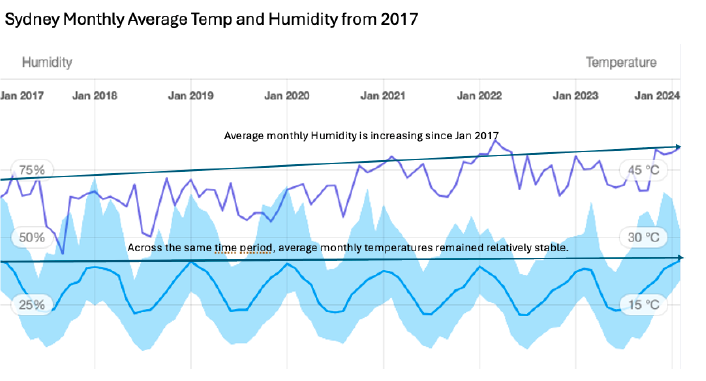
Over the last two months, most conversations I have begin with, “How humid is it? I’ve never experienced anything like this before.”. To confirm people’s suspicion, they are right. Temperatures like this often occur in Australia over summer in all states. Sure, we have our heat waves, but the heat combined with the humidity has been something we haven’t had. A great example is Sydney; whilst not a growing region, it provides a great insight into the overall trend where temperatures remain consistent with historical trends, but the humidity is increasing over time.
Why is this happening?
The current weather conditions are a result of typical climatic patterns enhanced by global warming effects. At present, sea surface temperatures are 1–3°C higher than what’s usually expected around this season along the eastern coastline. Notably, temperatures are significantly warmer near the border of Queensland and New South Wales, as well as along the eastern shores of Tasmania. Elevated sea temperatures lead to increased evaporation rates. The resulting moisture is absorbed by the air, which can retain more moisture at higher temperatures. This humid air then reaches us through wind currents, triggering increased perspiration.
Will this continue?
Yes and no, we move into Spring next month; yes, it will get more liveable as the temperature cools naturally as we move from Summer to Spring. From February through April, a significant portion of Australia faces a likelihood of experiencing higher minimum temperatures except for certain areas in the south. So, whilst it will feel more liveable (cooler overall), we can expect that
it will be warmer vs the historical average as higher dew point and humidity correlate with the warmer sea temps on average.
What does this mean for Berries?
For early pollination areas across all Berry types in the northern growing regions, it means we should expect higher disease pressures such as powdery mildew, botrytis, and blight. In regards to pests, it will be perfect for prolonged pest issues, and growers need to start planning for this specific to their region and crops.