
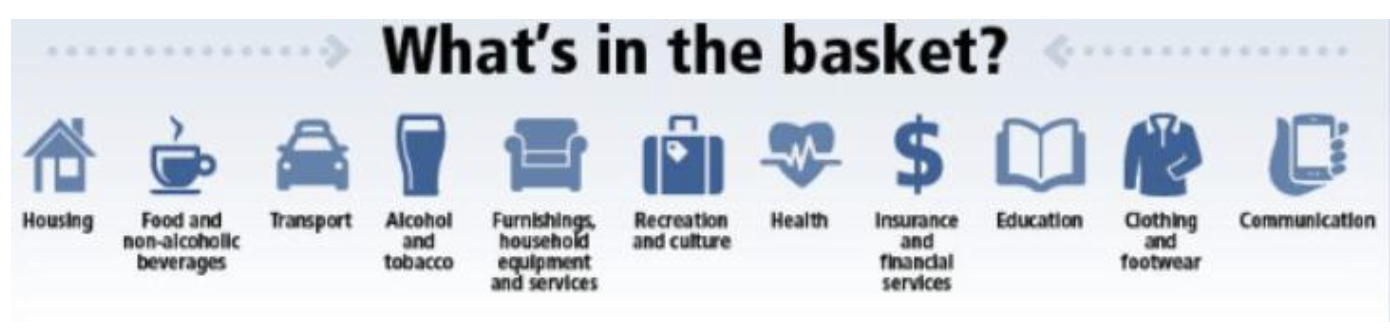
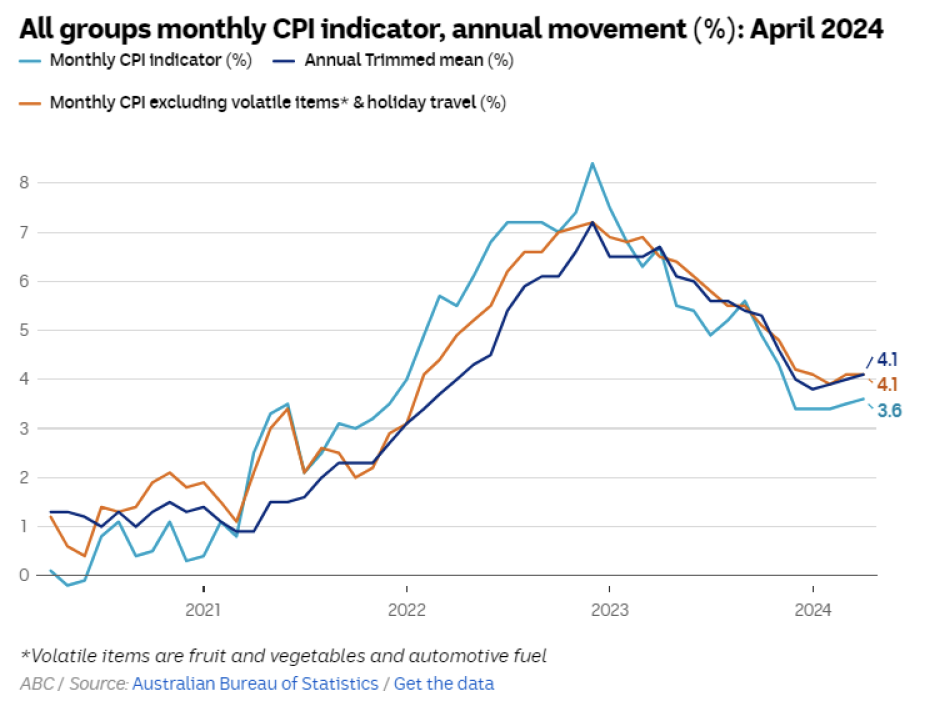
Inflation has slightly increased for the 12 months to April to 3.6% (up from 3.5% for 12 months to March), making it the second consecutive month where it has increased after dropping since the peak in December 2022. The Australia Bureau of Statistics measures the prices of a basket of goods to monitor the change in prices.
The Reserve Bank of Australia sets interest rates each month with the goal of keeping inflation between 2-3%, they use monetary policy to try to slow down demand, households with mortgages will see a decrease in the money they have to spend. Previously some economists had forecast that interest rates would start being cut in August this year however this is now unlikely and brings the chances of another interest rate hike. High population growth is a contributing factor to the increase in demand and therefore price of essential services including education, health, fuel, electricity, financial and insurance services along with a shortage of housing supply.
What does this mean for Berries?
Some consumers will act upon their expectations, and with the cost-of-living pressures and now talk of further rate hikes, they may pre-emptively start to cut back their expenditure, even if they
don’t yet ‘need’ to just yet. It may result in switching from eating out to cooking at home or on staycation, which would benefit berries but may also decrease the purchase frequency of products seen as a treat, such as berries. Households with mortgages, pensioners and renters will continue to be more price-sensitive as the news continues to focus on the cost of living. Consumers have been increasing their patronage at Aldi and Costco and buying more home-brand items. The number of items in a trolley has decreased at the major chains as shoppers try to reduce spending.
SOURCE: https://www.abc.net.au/news/2024-05-29/inflation-picks-up-slightly-in-april-to-3-6-per-cent/103906500