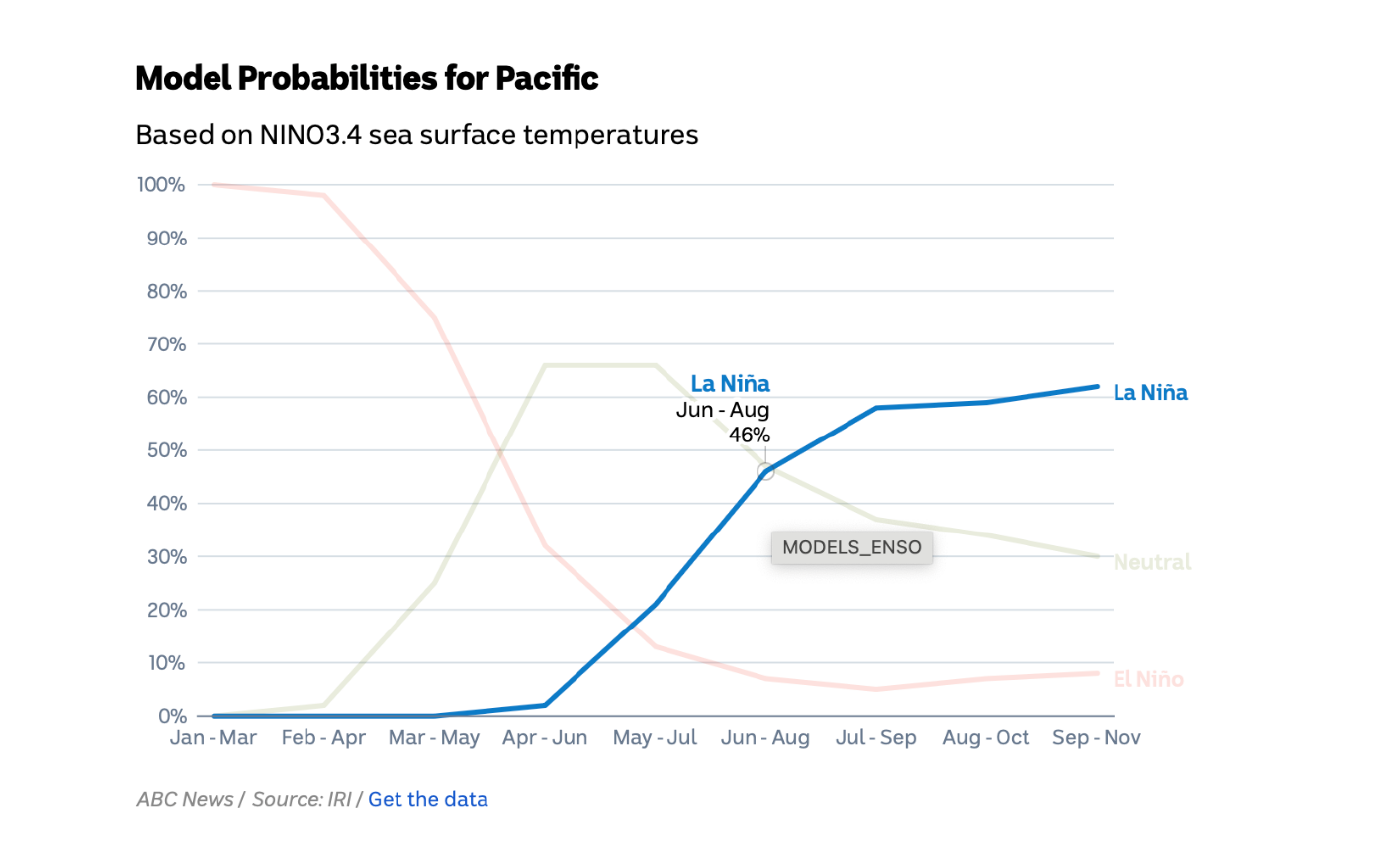


In 2024, Australia could be poised on the brink of a significant climatic shift due to the potential resurgence of La Niña, the country’s most influential climate phenomenon. The possible return of La Niña is anticipated to tilt the scales towards a year marked by abundant rainfall, as suggested by global weather models that predict a notable cooling of sea surface temperatures across the equatorial Pacific in the upcoming months. This cooling trend signals not just the swift conclusion of the current El Niño phase but also heralds a speedy transition to the fourth occurrence of La Niña within a mere five-year span. The frequency of La Niña events has only been paralleled twice since the dawn of the 20th century, underscoring the uniqueness of the current climatic conditions.
The likelihood of this scenario unfolding is supported by more than half of the predictive models, which foresee a transition to La Niña conditions during the winter months, with the probability exceeding 60 per cent by the spring. This is a significant deviation from the climatological norm, wherein only 25 per cent of years typically experience La Niña conditions. Despite the inherent scepticism that often accompanies early-year forecasts—the current projections for La Niña’s return in 2024 are underpinned by a robust trend in the Interdecadal Pacific Oscillation (IPO), so whilst it is not guaranteed it is showing a stronger than average probability.