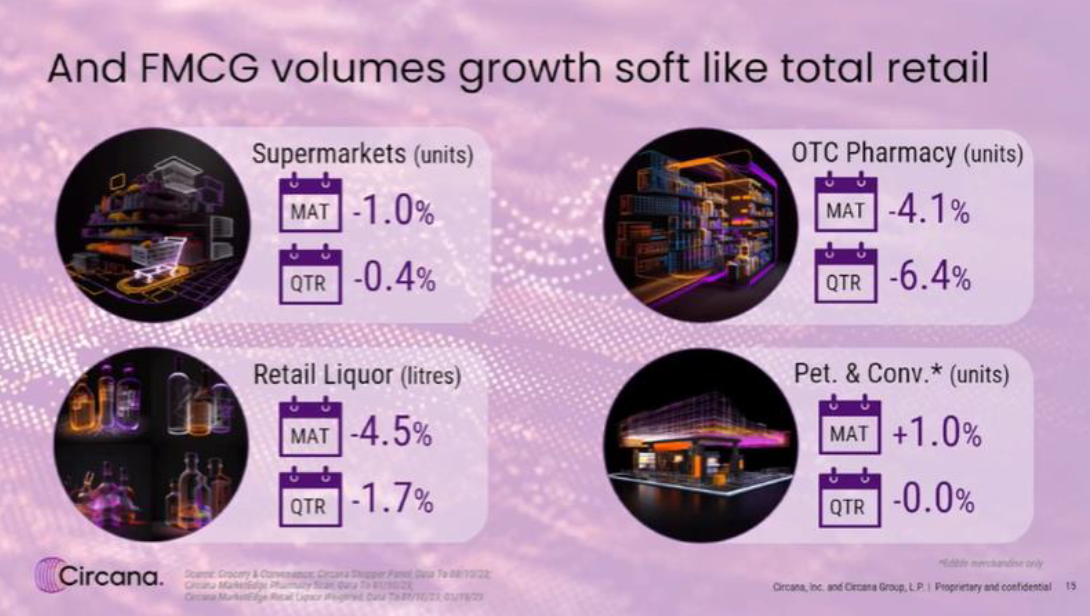


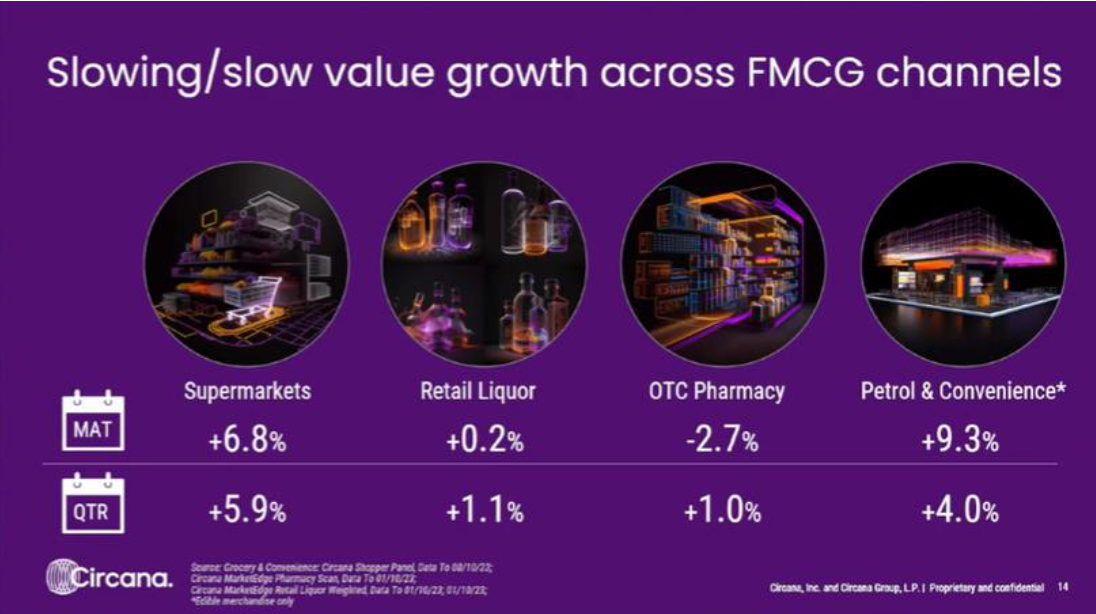
Last week, Circana (previously IRI/Aztec provider of Coles supermarket scan data) presented a State of the Industry report. In the current economic environment of rising interest rates, rents and home loan repayments affecting all but one-third of the population who own their home outright, we are seeing more pressure on households with persistent inflation continuing to erode buying power. Data from Circana shows that dollar growth is slowing across all channels, with growth in the latest quarter lower than the growth rate in the MAT (last 52 weeks) in Supermarkets, Pharmacy and Petrol and convenience; the only exception is Liquor, which is somewhat flat.
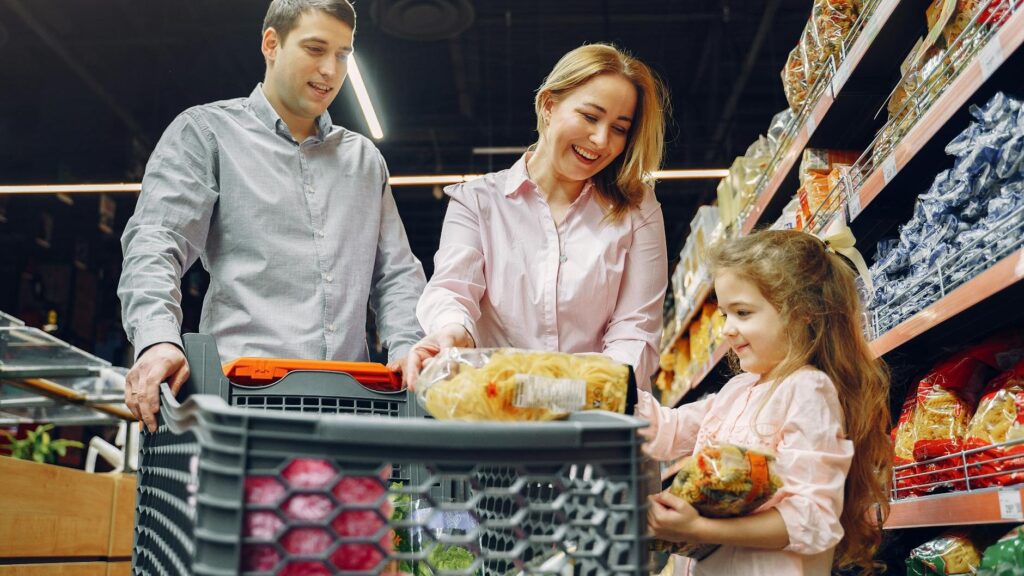
Looking at data based on units to get an idea of volume growth, supermarket volumes are in negative territory, albeit it is only a minor drop thus far. This is counter to general trends of growing in home consumption, and usually, grocery shopping increases during tough economic times; however, this could be pointing to consumers cutting back on purchasing ingredients, perhaps not buying peripheral items or reducing snacking in the face of rising prices. We will need to monitor these trends to understand them better.
Data based on units masks several trends that might be happening, such as shrinkflation and changes in pack sizes. Shrinkflation is where manufacturers choose to decrease the grammage or pack size and keep the shelf price unchanged. One example of this is in the chocolate category, where Cadbury chocolate blocks moved from 250g to 180g. This move effectively increases in price, often in response to inflation and input costs increasing, as we have seen over the past three years. A packaging downsize can be more palatable than increasing the shelf price as some consumers are less aware of the change in size, but a higher shelf price might be a barrier to purchase.
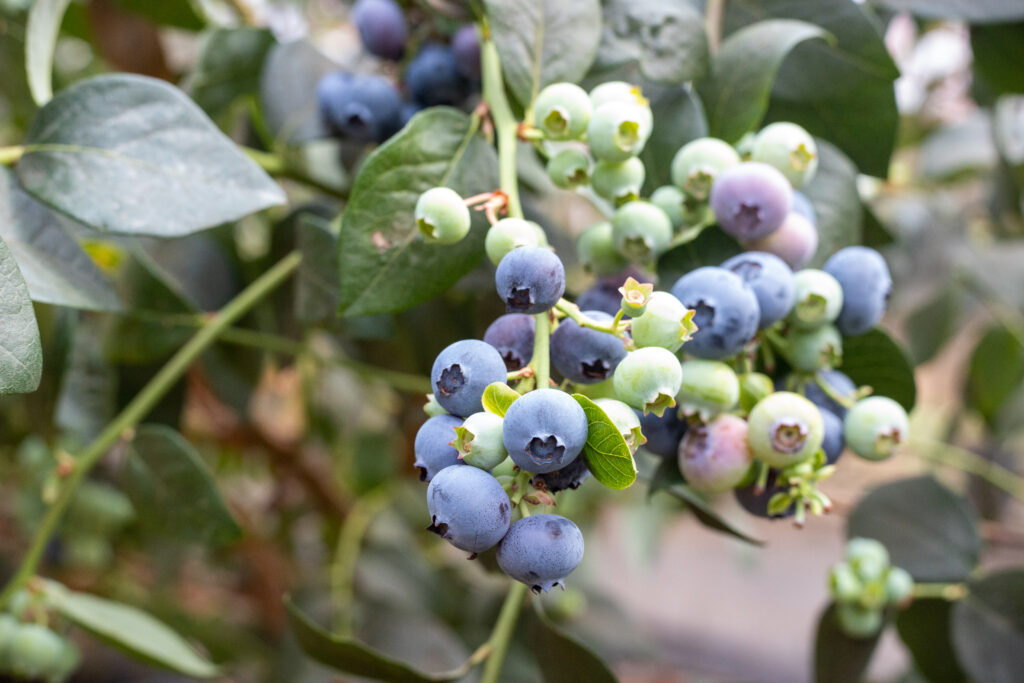
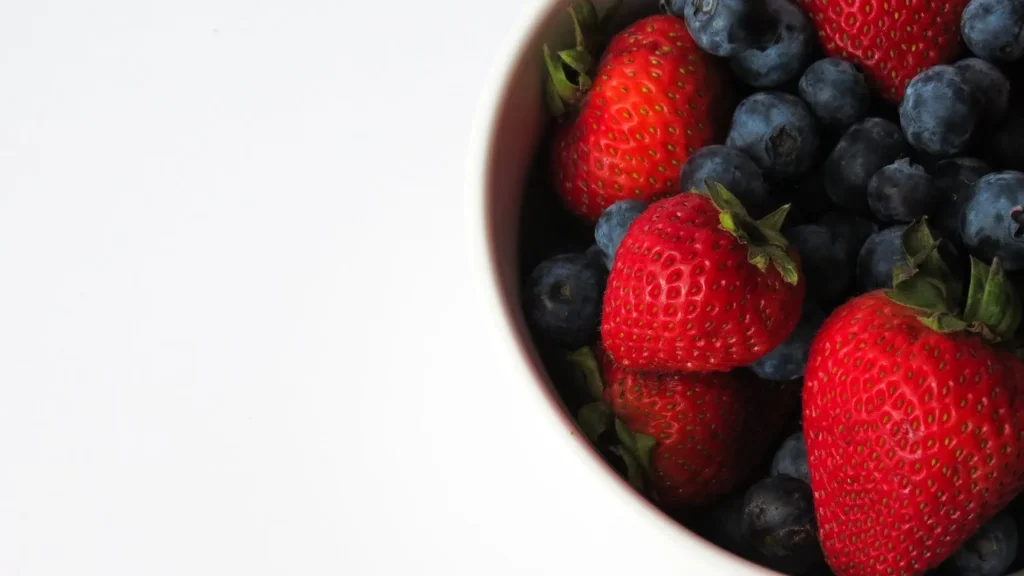
Within berries, we have seen an upsize in packaging from 125g to 170g in Blueberries, Blackberries and now Raspberries, and the volume change is not being picked up when looking at Units. The upsize has helped to move through the additional volumes due to better-growing conditions this year than in the last few years with La Nina. Without an upsize, a larger price drop may have been needed to move extra volume; within Blues, we saw an increase of 65% since July compared to last year.